Quality that Stands Out
Building for the “Middle Market” in Grand Cayman with Repeatable Design, Strong Relationships, and Practical Efficiency
In residential development, the strongest brands are often built not on extremes, but on clarity—knowing exactly who you serve, how you deliver, and why your model works. For Thompson Quality Homes, that clarity shows up in a consistent approach to product, pricing, and process: well-designed residences aimed at the heart of the Grand Cayman market, delivered through repeatable plans that can be customized—but not at the expense of efficiency, schedule, or affordability.
Owner and CEO Kel Thompson describes the company’s niche as serving “the masses,” positioned intentionally between the lowest-cost builds and the ultra-high-end segment. The typical buyer profile is broad and practical: young professionals, move-up buyers, and buyers transitioning from apartments into ownership—customers who want quality and value, and who benefit from a builder that has refined a repeatable model over decades.
“We’re not the absolute lowest cost, and not necessarily the highest end,” Thompson explains.
“We try to focus our market on where there are quite a lot of people purchasing, and we tend to do customized cookie-cutter homes.”
A Vertically Integrated Model Built Around Control
Thompson Quality Homes operates across the full lifecycle of a development. Thompson describes the business as an integrated company that conceives, designs, builds, markets, and sells its projects—and in many cases continues to provide some level of management after completion.
That vertical integration isn’t just a business structure; it’s a risk-management strategy in a market where planning approvals are bureaucratic, timelines can be affected by process delays, and efficiency is tied closely to controlling the moving pieces.
Thompson has been active in construction and development since he was young, with family roots in the industry. While he doesn’t recall the exact year the “Thompson Quality Homes” brand was formally adopted, he notes that he began developing homes in 1987, and over his career estimates he has delivered somewhere between 250 and 400 homes across Grand Cayman.
“Customized Cookie-Cutter Homes”: Why Standardized Plans Win
At the core of Thompson’s approach is a set of established floor plans—refined over time and reused with slight modifications. The model is designed to provide customers with a strong product at a reasonable price, while allowing the company to build efficiently and consistently.
What’s notable is that Thompson doesn’t frame repeatable plans as rigidity. He frames them as a way to protect outcomes.
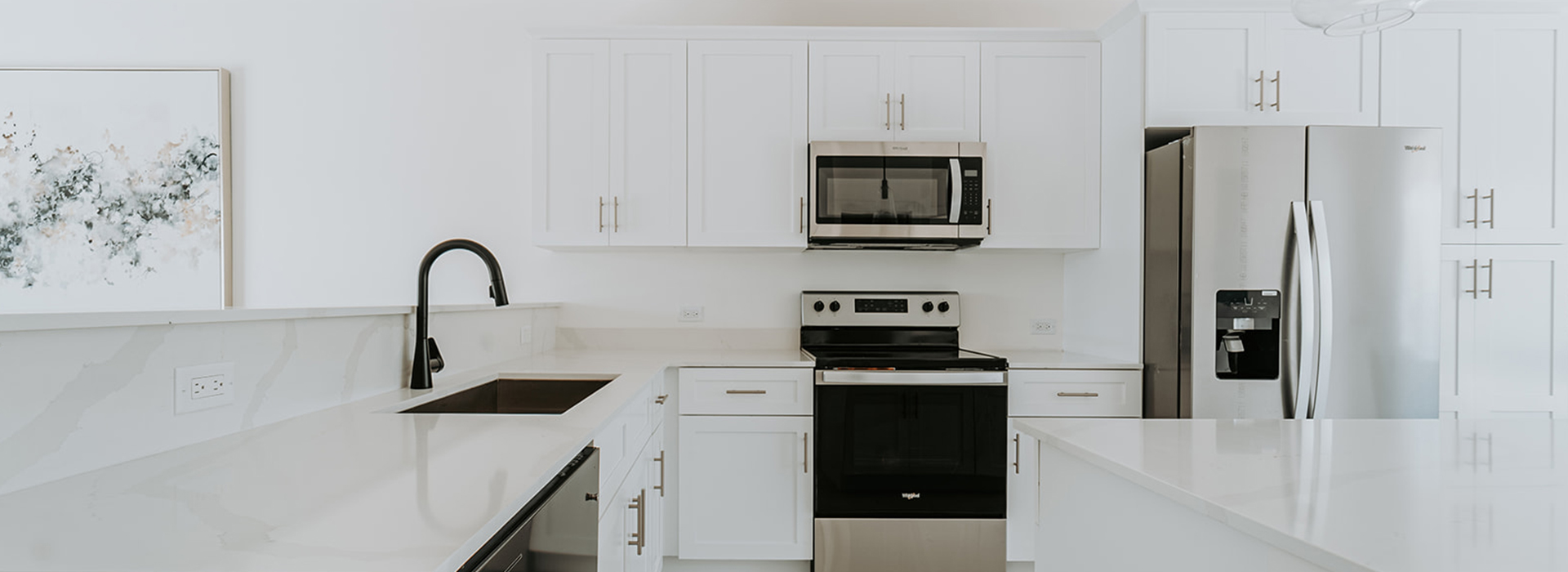
Designs evolve as lifestyles change. Features that mattered decades ago—such as dedicated points for TV dishes or extensive hardwired cable infrastructure—have largely given way to Wi-Fi-driven living. Interiors have shifted too, with open concepts and kitchen islands displacing older room configurations and furniture-centered layouts. The “base plans” remain, but the details evolve as buyer expectations evolve.
Customization is possible, particularly when a buyer purchases pre-construction. However, Thompson is careful about how far that flexibility goes—because in his experience, frequent plan changes introduce cascading impacts across engineering, electrical, plumbing, and permitting.
“The average client doesn’t understand that when you make one change, it affects lots of other plans,” he says. “And it delays the project very significantly.”
In Grand Cayman specifically, changes that impact structural layouts, electrical, or plumbing often trigger the need for revised planning permissions—a process that can meaningfully slow down delivery. For that reason, customization tends to be limited to selections that don’t alter core systems, such as cabinetry or bathroom finishes, unless the project is structured from the beginning as a truly custom build.
Thompson notes that he generally avoids full custom homes because they are often less efficiently planned and executed, making it difficult to deliver the “good product at a good price” that defines the company’s market position.
Relationships That Make the Model Work
Like many island-based construction environments, the supplier ecosystem is tight. Thompson points out that there are only a few local suppliers, and relationships are personal.
Most business flows through real estate agents, which Thompson views as a practical advantage. While the company maintains a website and advertising presence, he believes buyers ultimately get the clearest picture of a development through an agent who can interpret value, answer questions, and help set accurate expectations.
Once a buyer becomes a customer, Thompson Quality Homes makes a point of staying in touch, maintaining the relationship beyond the transaction.
Supplier and subcontractor relationships are similarly rooted in familiarity and long-term trust. Thompson identifies his largest supplier as A. L. Thompson’s and describes the relationship as direct and responsive. He also notes strong working relationships with Kirk’s (a local hardware supplier) and Paramount (a key source for tile and related finishes).
Long-standing electrical support is also provided through Crawford Electrical, a relationship Thompson describes candidly and realistically—like many long-term partnerships in construction, it has its moments, but it endures because delivery matters.
The philosophy, Thompson says, is simple: if partners take care of the company, the company takes care of them.
Project Highlights Across Grand Cayman
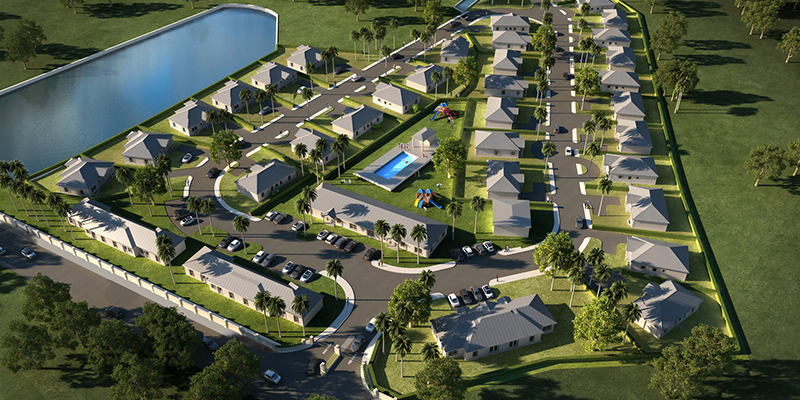
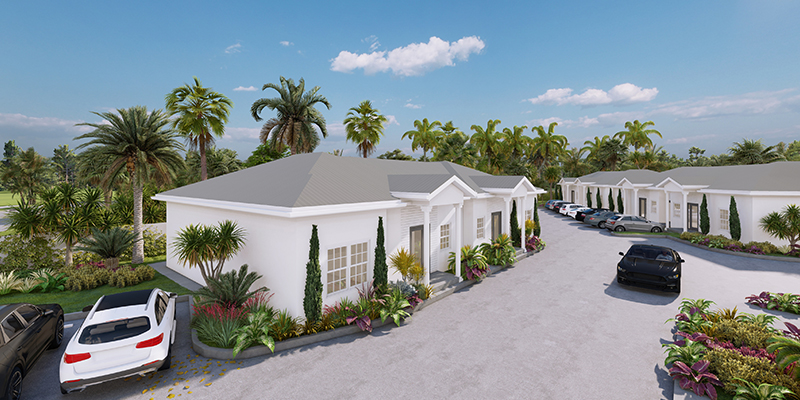
Over the years, Thompson Quality Homes has delivered a range of housing and condominium developments, including several standout projects that reflect both scale and complexity.
Thompson identifies Wyndham Reef and Castaways Cove in East End as the largest development he has delivered, totaling 83 condos, with the final phase completed around 2006.
Another major project is South Shore in Spotts—approximately 47 apartments, built on stilts along the south coast, just a few miles from town.
More recently, the company brought 26 apartments online in West Bay, completing and finishing a project called Mizpah within an existing development that the company did not originally start.
Looking ahead, the most significant project currently in planning is a 34-unit mid-range apartment complex on South Church Street, adjacent to the oil depot. The site is personally meaningful—located where Thompson’s family home once stood—and the vision includes two-bedroom oceanfront condos and a proposed “sea pool” concept created by allowing ocean water to fill a protected inlet. Planning approvals are still underway, and Thompson notes permissions will determine what is ultimately possible.
A Practical View of Sustainability and Efficiency
Sustainability is part of the conversation, but Thompson approaches it through a pragmatic lens: efficiency matters, but it must remain compatible with affordability.
The company aims to make buildings as efficient as possible “without going to the extreme,” and Thompson is blunt about what he sees in buyer behavior: many people support environmental initiatives in theory, but become less enthusiastic when the cost is directly on their balance sheet.
For example, high-efficiency ceiling systems may not be required by code and can add high cost; in Thompson’s experience, few buyers choose those upgrades when they are optional and fully priced.
Where Thompson Quality Homes does lean in consistently is in infrastructure that can be implemented cost-effectively. The company often installs sewage treatment plants, even when not strictly required—an efficiency and environmentally-driven decision that aligns with long-term asset performance.
Solar, on the other hand, is not a standard inclusion in the company’s model. Thompson cites the economics—return on investment and upfront cost—and the financing impacts. When solar increases the overall price of a home, banks may not finance the additional amount in a way that benefits the buyer, and it can raise down payment requirements—often the biggest obstacle to home ownership.
It may not be the most popular narrative, Thompson acknowledges, but for the segment he serves, affordability and access remain central.
Culture: Loyalty, Integrity, and Long-Term Retention
As a smaller company, Thompson Quality Homes prioritizes hiring people who align with the organization rather than trying to “change” people after they arrive. Thompson describes loyalty as the most important cultural trait, followed closely by honesty and a commitment to strong customer service.
He notes that many employees have remained with the company for a long time—an indicator, in his view, that the culture is working and that expectations are clear.
The company also maintains a core crew that includes many non-local workers on permits, acknowledging the reality of the labor movement in island markets. Some team members rotate back to their home countries after a few years, while others return for additional stints.
Technology Integration: Useful in the Office, Practical in the Field
Technology plays an increasing role in the business, and Thompson’s comfort with it is personal as well as professional. An airline pilot by profession and a former computer programmer, he describes himself as “not the slightest bit scared by technology,” and notes that he uses AI regularly.
Within the company, AI is currently most useful in research, scheduling support, and code compliance checks, as well as sourcing and evaluating materials. In the field, Thompson emphasizes, construction still requires hands-on execution—setting trusses, lifting materials, anchoring structures—and while electronic layout tools help with leveling, angles, and setting out buildings, the job remains fundamentally physical.
“We use it more in the office than in the field,” he says. “The technology in the field is not really AI yet.”
What’s Next: 2026 Priorities and Active Projects
Entering 2026, Thompson Quality Homes has a clear set of active and upcoming priorities.
The largest future initiative is the South Church Street project, which the company hopes to begin by the end of 2026, pending planning approvals. Additional near-term construction includes a 16-unit project in Savannah, which has just begun.
The company is also actively renovating and selling inventory in two purchased apartment communities: Sandscape Residences in West Bay (a 36-unit asset being renovated and sold in stages), and Vista Caribe in Grand Harbour, where remaining units are also being renovated and brought to market.
Alongside these development priorities, Thompson sums up the year ahead with characteristic simplicity: deliver the projects, keep improving the product through customer feedback, and—if possible—make time to fly.
A Builder’s Discipline in a Competitive Market
Thompson Quality Homes stands out not because it claims to build for everyone, but because it has structured a business model that protects the most important outcomes for its market segment: quality, affordability, and reliable execution.
By combining repeatable design with controlled customization, long-term supplier relationships, and a vertically integrated delivery model, the company has built a durable platform in one of the most competitive sectors in any market: housing.
And for Grand Cayman buyers who want a home built properly—without the inefficiencies and delays that can accompany full custom work—Thompson Quality Homes continues to position itself where demand is strongest: the middle of the market, delivered with discipline.
AT A GLANCE
Who: Thompson Quality Homes
What: A builder that focuses on sustainability, client relations, and building homes that are second to none
Where: Cayman Islands, Caribbean
Website: www.tqh.ky
PREFERRED VENDORS/PARTNERS

Island Waste Carriers Ltd. www.websitename.com
Island Waste Carriers (IWC) delivers comprehensive residential, commercial, and construction waste solutions across Grand Cayman. Services include garbage pickup, bulk collection, dumpster rentals, bin cleaning, compactors, food waste programs, grab truck hauling, and convenient recycling through our sister company, Island Recycling—helping reduce landfill waste, protect the environment, and contribute to a cleaner, more sustainable community.

Tropical Architectural Group Ltd. www.tag.ky
Founded in 2003 by Darrel Ebanks, TAG began as an architectural design firm behind Cayman’s Vela, San Sebastian, Eleven Parc, Landmark Square, Arvia and more. With over one million square feet of experience, TAG is now a one-stop development partner delivering sustainable, affordable housing using advanced design-build technology for Cayman

Triangle Exports Worldwide www.triangleexports.com
Since 1996, Triangle Exports is dedicated exclusively to providing the Caribbean Construction Industry with quality products and outstanding reliable service. Our industry wide product line of factory-direct export pricing for windows, doors, finishing and custom materials along with freight consolidation services save you time and money, worry-free, to ensure your materials arrive on time and within budget.
DIG DIGITAL?