
Signaling a Great Future
Building the Caribbean’s Marine Future
For more than three decades, Capital Signal has quietly shaped coastlines, strengthened marine infrastructure, and supported both energy and tourism development across the Caribbean.
Founded in 1992 by Roland Herrera and Barry Rosier, the family-owned marine construction and coastal engineering firm has grown from a Trinidad-based operation into a regional player with offices in Mexico, Guyana, and Jamaica.
While its early years included significant work in geophysical and geotechnical services for the oil and gas sector, today the company’s Caribbean operations are firmly focused on marine construction, coastal protection, and
waterfront development.
With approximately 50 dedicated employees—from skilled laborers to engineers and management professionals—Capital Signal operates with a hands-on, collaborative culture that reflects its origins.
“We’re not a rigid corporate structure,” says Sebastian, representing the company’s leadership team. “It’s an open-door policy. Everyone works together to get the job done.”
A Collaborative Model
At its core, Capital Signal remains a relationship-driven business. As a family-owned company, longevity and loyalty are defining characteristics—several employees have been with the firm for over 20 years.
Rather than a top-down corporate model, the company operates with a collaborative ethos. Field crews, engineers, and management align closely on project execution, fostering accountability and flexibility in an industry where conditions can shift quickly.
This internal culture mirrors how the company engages externally. Marine construction in the Caribbean is a relatively small and specialized sector. Competitors frequently become collaborators, sharing equipment and subcontracting when necessary to meet project demands.
Sebastian explains. “We compete, but we also work together. If one contractor has equipment available and another doesn’t, we help each other out.”
That cooperative approach strengthens the industry as a whole—and reinforces Capital Signal’s long-standing presence across the islands.
A Regional Footprint Anchored in Marine Expertise
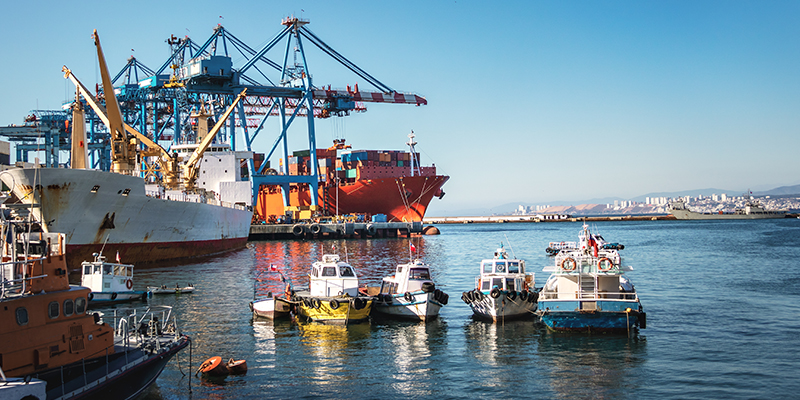
Capital Signal’s service portfolio centers on nearshore marine construction and coastal engineering. The company designs and builds: Jetties and wharfs, cruise ship terminals, boat lifts, concrete marine structures, fendering systems, coastal revetments and groins, as well as beach restoration and erosion protection works
The firm also operates a waterfront facility in Trinidad, developed in 2016 as a strategic diversification initiative. Originally intended to support its own mobilizations and demobilizations, the facility now services external clients, including oil and gas operators and shipping companies. With five vessels supporting operations, Capital Signal provides cargo loadouts, offloading services, and marine logistics support, expanding opportunities.
Oil, Tourism, and Infrastructure Development
While Trinidad’s economy remains heavily influenced by oil and gas, Capital Signal’s work spans multiple sectors.
Currently, the company is constructing a large jetty for an oil and gas operator in the Caribbean. The project includes full design, engineering, and construction services—a testament to the firm’s technical capability.
Beyond energy, tourism-driven marine infrastructure has become an increasingly important market segment. Capital Signal has completed projects for the Four Seasons development in Saint Kitts and Nevis and major fendering upgrades in Saint Lucia to support tanker operations.
Post-pandemic recovery has accelerated tourism investment across the Caribbean. Since 2024, Sebastian notes, both contract volume and client spending have increased.
“We’re seeing major tourism developers reinvesting in the Caribbean,” he says. “They’re bringing high-end overwater experiences similar to what we are seeing in the Caribbean, closer to North America.”
That trend translates into new demand for jetties, waterfront access points, and coastal stabilization projects—areas where Capital Signal holds deep expertise.
Supply Chain Strength and Local Commitment
Operating from Trinidad offers a distinct advantage. As one of the Caribbean’s more industrialized economies, Trinidad provides access to steel, concrete, piling materials, and construction infrastructure at scale.
A significant percentage of Capital Signal’s materials are sourced locally. When quantities or specialty components are unavailable, the company leverages established supplier relationships in the United States, particularly for marine fendering systems and specialized
steel products.
This blend of local sourcing and international partnerships provides flexibility while supporting regional economies.
Investing in Assets and Expansion
Looking ahead, Capital Signal is focused on scaling both its physical assets and geographic reach.
The company is looking at increasing capacity across the region. With offices now established in Guyana and Jamaica, leadership aims to position equipment strategically throughout the Caribbean, reducing mobilization time and expanding project opportunities.
Human capital remains equally important. Capital Signal actively recruits from the University of Trinidad and Tobago and the University of the West Indies, both of which maintain strong civil engineering programs. While marine construction is not always a formal specialization in academic curricula, the company provides practical, hands-on training that bridges that gap.
“We get young engineers coming in who are excited about the field,” Sebastian says. “They gain real marine construction experience here, which opens the door to long-term experience with us.”
As expansion continues, job creation follows—not only within Capital Signal’s workforce but also in the local economies where projects take place.
Preparing for Renewable Energy Opportunities
While concrete and steel remain the backbone of marine construction, new opportunities are emerging. Capital Signal is closely monitoring renewable energy development in the Caribbean, including offshore wind and ocean-based energy projects.
Strengthening regional staging capabilities positions the company to participate in these future developments.
“We want to have the assets ready,” Sebastian notes. “When renewable projects begin scaling in the Caribbean, we’ll be able to go after them.”
Steady Growth, Regional Impact
Capital Signal enters the new fiscal year with strong momentum and continued growth prospects.
For a company that began as a focused marine contractor in 1992, the trajectory reflects both steady expansion and strategic diversification.
From oil and gas infrastructure to tourism development, coastal protection to renewable energy preparation, Capital Signal continues to shape the Caribbean’s marine landscape—one jetty, one shoreline, and one partnership at a time.
AT A GLANCE
Who: Capital Signal Company
What: A leading naval infrastructure and construction company working on major island projects
Where: Trinidad and Tobago, Caribbean
Website: www.capitalsignal.com
PREFERRED VENDORS/PARTNERS
Dumore Enterprises Ltd www.dumore.co
Dumore Enterprises Ltd. delivers end-to-end transport, rental, oilfield and industrial solutions across Trinidad and Tobago and the wider Caribbean. Our portfolio is supported by vehicle rentals and leasing, alternative fuel options, and large-scale transport and logistics for complex projects, alongside joint integrity and pipeline services and engineered products for onshore and offshore industries. For Mobility, Asset Integrity and Joint Integrity, we are your solutions partner!
DIG DIGITAL?