Grand Cayman’s Power Partner
Navigating Costs, Complexity, and Change
In one of the most expensive places to live on the planet, keeping the lights on—literally and figuratively—is no small feat. For Corporate Electric, a Cayman-based electrical technology contractor, it is all in a day’s work. This leading electricity contractor has spent the last 25 years designing, supplying, and installing electrical systems across the Caribbean and staying competitive means constantly recalibrating to rising costs, shifting supply chains, and an increasingly complex construction landscape.
“We are an electrical technology or electrical contractor,” explains Shavana, who supports the company’s leadership team. “We supply electrical products and also carry out construction for electrical works—installations, design. We supply across the Caribbean and we’re based here in Cayman, which is where we do most of the servicing of products and working on construction sites.”
From that base in Grand Cayman, the company has grown from a small, service-led operation into a multi-disciplinary electrical powerhouse with an in-house engineering department, 16 major product lines, and a central role in many of the island’s largest commercial and hospitality projects. Along the way, it has weathered an economic downturn, a global pandemic, and some of the most volatile supply-chain conditions in modern memory.
Supply Chain Reality Check: No Easy Reversal on Pricing
While lead times have improved since the peak of the pandemic, the underlying pressures that reshaped global supply chains have hardly evaporated.
“Supply chain challenges still exist,” says Managing Director David Johnston. “There are still material shortages. We’re seeing tariffs, increasing costs, and market uncertainty. Lead times have improved, and many manufacturers have streamlined their processes, but I’m not seeing any real ease in pricing. Shipping costs are still challenging.”
With the Cayman Islands depending heavily on imported materials, shipping logistics are more than an inconvenience; they’re a strategic constraint. The company has been forced to get creative, exploring new routes and sourcing options to bring product into Cayman more efficiently and cost-effectively.
“We’re being forced to rely more on new partnerships, new relationships, new supply chains, new processes, new technology. It’s all part and parcel of what’s transpired inside the last five years,” Johnston notes.
What hasn’t changed is the fundamental imperative: remain competitive in a market where everyone is sharpening their edge. The result is a more deliberate approach to both purchasing and pricing, buttressed by deeper relationships with manufacturers and a broader portfolio of brands.
High Cost of Living, Higher Stakes for Business
Grand Cayman consistently ranks among the top three most expensive places to live globally. For a labour-intensive, service-driven business, that reality permeates every decision.
“If you were to Google the highest cost of living, you’d quickly realize that Grand Cayman is either one, two, or maybe third on the list,” Johnston points out. “You’ve got two Caribbean islands and Switzerland in the top three.”
He traces a significant part of that cost escalation to the rapid growth of short-term rental platforms such as Airbnb and VRBO, which removed hundreds of apartments from the long-term rental pool.
“By allowing this to occur, they considered the boom in construction, but they never considered what would happen to the cost of living,” he says. “When rent goes up, you have to start paying employees more, across the board, because you have to pay them enough to live here.”
That cost-of-living squeeze has a direct impact on talent attraction and retention. In years past, skilled professionals were willing to relocate with little hesitation. Today, compensation conversations start with a hard look at housing and everyday living costs.
“Labor is a big challenge, whether it’s here or abroad,” Johnston says. “Skilled labor and affordable skilled labor is very, very challenging. The first thing people look at now is the cost of living, and that makes attracting very skilled, talented people even more difficult than before.”
Against that backdrop, the company has leaned into technology, process improvements, and smarter organization-wide efficiencies to maintain profitability without sacrificing service.
Technology, Processes, and the Human Touch
Internally, the company’s mantra is simple: adapt or be left behind.
“Yes, technology and processes are huge for us,” Johnston explains. “But in this modern age, people still want that human interaction. I don’t like when a bot answers my questions; I don’t care for it.”
This philosophy guides their operational design. The team has built communication processes to keep phones answered, responses timely, and customers connected to real people.
“We’ve got processes that, if this person is on lunch, the phone rolls to this person or that person,” he says. “We always try to answer the phone and get back to people. Communication is big. We’re less than perfect, but we’re always trying to improve.”
Technology meanwhile underpins everything from design and estimating to marketing. What once demanded an external agency and full-time specialists can now be executed in-house thanks to modern software and digital platforms.
“Fifteen years ago, we’d have had to hire an advertising company to do what Shavana is doing,” Johnston comments. “Now with technology and applications, she’s able to kind of do things herself—and she’s doing a good job.”
This blend of human-centered service and tech-enabled efficiency has allowed the company to scale while keeping overhead in check and responsiveness high.
From Service-Focused to Project Powerhouse
When the company started 25 years ago, its service department played a crucial role in keeping the business afloat through lean times. That service-first positioning also gave it a front-row seat to the installed base of electrical equipment across Cayman.
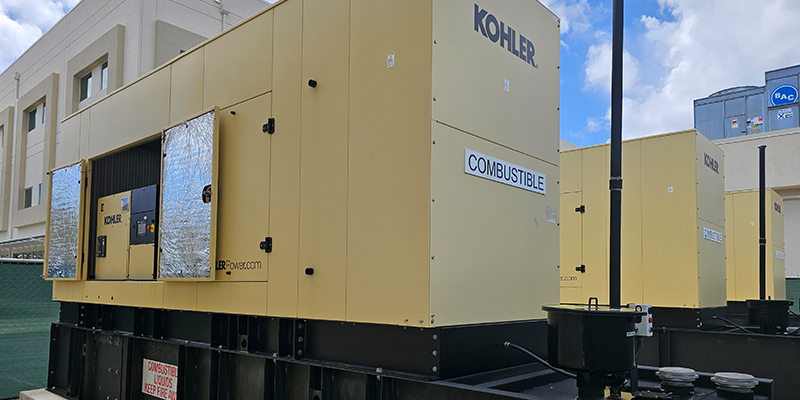
“When I was tasked with starting the service department, I went out and looked at all the products that were currently installed in Cayman that didn’t have any representation,” Johnston recalls. “I reached out to manufacturers and said, ‘I see all this equipment here. There’s nobody here to service it.’ That’s how I started slowly obtaining distributorships.”
Over time, those relationships evolved into a robust distributorship portfolio. Where the company previously represented around eight brands, it now supports 16 major lines across the electrical spectrum. Many of these manufacturers see the firm’s integrated engineering and design capabilities as a strategic advantage.
“Since COVID, we’ve expanded in terms of distributorships and brands, becoming dealers and distributors,” Shavana says. “That allows us to offer our products and services at a competitive price with what’s going on in the economy. Having these partnerships with the brands we support helps us stay on top of pricing and service, and us being well trained on all the brands we support helps us offer a wider range of services and products, while being affordable at the same time.”
Today, the company’s in-house engineering department is heavily involved in residential, commercial, and hospitality design. Even though it only installs around a quarter of the projects it designs, this design influence feeds the supply arm of the business and solidifies its role as a trusted technical authority.
“We take all those lines of distribution, we drive them into our drawings, and we put them out to the public,”Johnston explains. “Then the public sometimes reaches out to us and purchases the products we specify.”
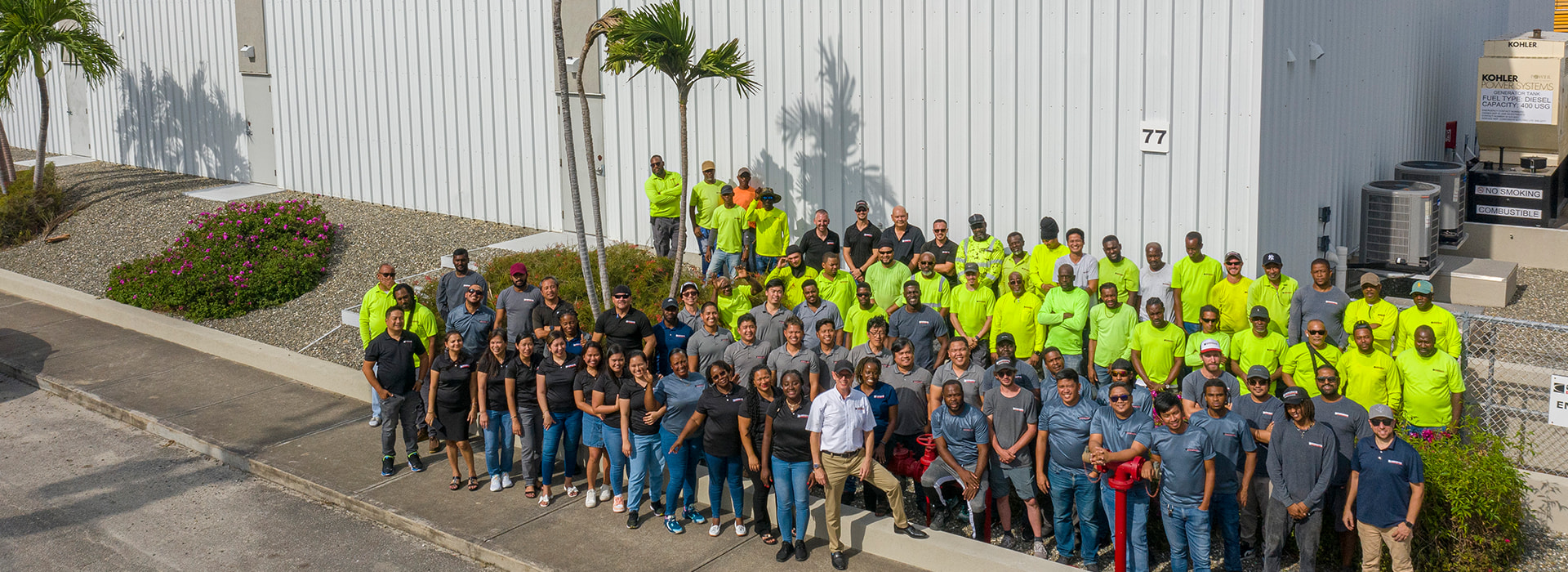
As planning changes in 2012 opened the door for high-rise development—10-storey hotels and large condominium complexes—the company made a conscious pivot to compete for larger projects. It has since more than doubled in size, operating with between 100 and 120 people, including subcontractors.
“The major growth, and the major segment of our revenue, is based on large construction,” Johnston notes. “Once you get to a certain size, you’ve got to feed the engine. You need a couple of large jobs and a whole bunch of small stuff to feed it.”
Cycles, Stakeholders, and the Long View
Like the AC sine wave David references, the company’s workload cycles through peaks and troughs—waiting for new projects, straining to deliver at maximum capacity, then sliding down as jobs wrap up.
“Right now, there’s one stagnant hotel, two hotels being planned, one that’s being built, and a couple of large condo complexes,” he says. “We’re at the tail end of several projects. Are we well positioned to take on a new project? Yes. Are they out there? Yes. It’s all about the numbers and the right fit and where we’re going.”
To navigate that cycle, stakeholder management has become a central priority.
“We’re being faced with increased red tape and bureaucratic challenges,” he explains. “Some developers are getting frustrated, and those challenges exist for us too, on multiple levels. Stakeholder management is still, and continues to be, the biggest challenge we deal with on a daily basis.”
The company has built a disciplined framework around profit-sharing and reinvestment, balancing shareholder returns with the capital needed to invest in equipment, training, and growth. Perhaps most impressively, it has done so without posting a negative year in a quarter century.
“We’ve got a very clear matrix in terms of how we deal with shareholders, profit sharing, and reinvestment in the organization,” Johnston says. “Those are set numbers that we adhere to. Based on our performance every year, we take the profit-sharing pool and divide it up. It’s never easy, but it’s worked for the last few years. And we haven’t had a negative year in 25 years—let’s cross our fingers.”
Lessons from a Pandemic—and an Earlier Crisis
Counterintuitively, one of the company’s best years arrived during the COVID-19 pandemic. Thanks to decisive local measures, Cayman became a kind of bubble, opened internally after a brief lockdown, while strict quarantine rules applied to those entering the island. The government’s temporary decision to allow people to access their pensions injected short-term liquidity into the economy, spurring spending and home improvements.
“As challenging as the pandemic was, it had a short life here,”Johnston reflects. “Oddly enough, one of our best years was actually during the pandemic.”
The economic downturn that preceded it, however, was far more punishing.
“The economic downturn was the hardest part of my business career,” he says. “That period really tested the model. We relied heavily on our service work to get through those challenging years.”
Those lessons—about diversification, resilience, and agility—continue to inform the company’s strategy as new uncertainties emerge, from geopolitical tensions and tariffs to labor shortages and rising interest rates.
The Road Ahead: Efficiency, Innovation, and Local Insight
Looking 18 to 24 months out, the company’s focus is clear: execute large projects well, refine processes, and deepen the capabilities that set it apart.
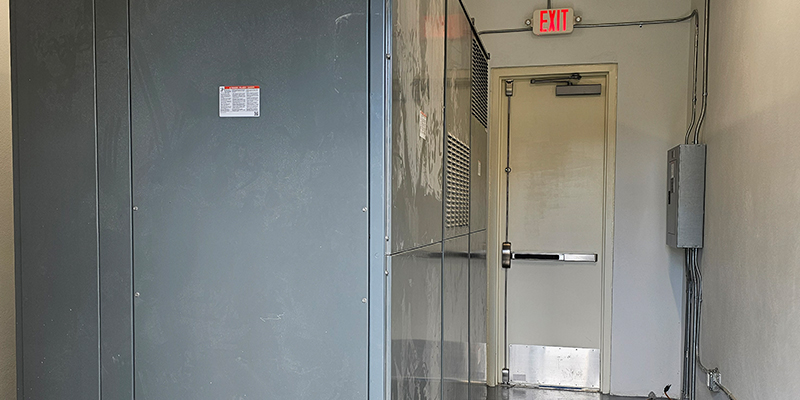
“As long as the large projects materialize, our energy will go into creating efficiencies, streamlining processes, and dealing with stakeholders in a way that allows everything to be profitable,” Johnston says.
Armed with a growing suite of brands, a strong engineering backbone, and a willingness to evolve with each economic “season,” this Cayman-based electrical contractor is intent on staying at the forefront of Caribbean construction—no matter how the global currents shift.
Click The Cover To View Or Download The Brochure
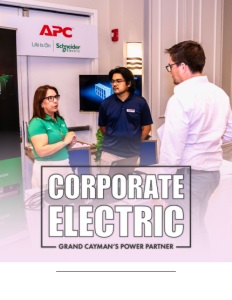
AT A GLANCE
Who: Corporate Electric
What: A leading electrical technology contractor that has spent the last 25 years designing, supplying, and installing electrical systems across the Caribbean
Where: Grand Cayman Islands
PREFERRED VENDORS/PARTNERS
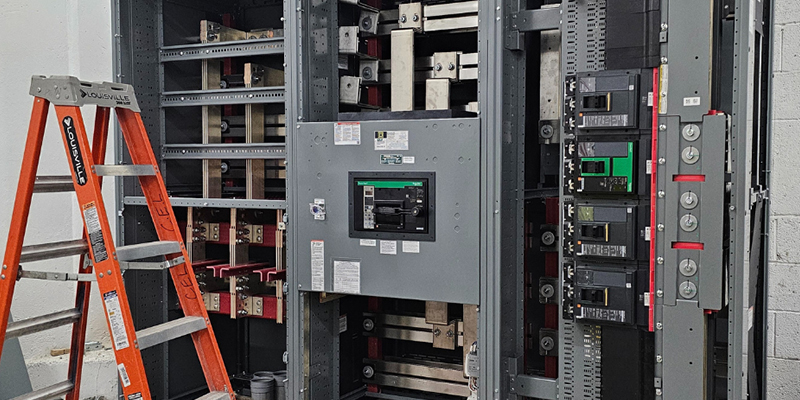
Schneider Electric : www.se.com
Schneider Electric is a global leader in energy technology, delivering efficiency and sustainability through electrification, automation, and digitalization. Its intelligent devices, software, AI systems, and services enable interconnected buildings, data centers, factories, and grids. With 160,000 employees worldwide, it remains one of the world’s most sustainable companies to this day.
DIG DIGITAL?