
Engineering Peace of Mind for the Caribbean
A Firm Window to Success as 2026 Beckons
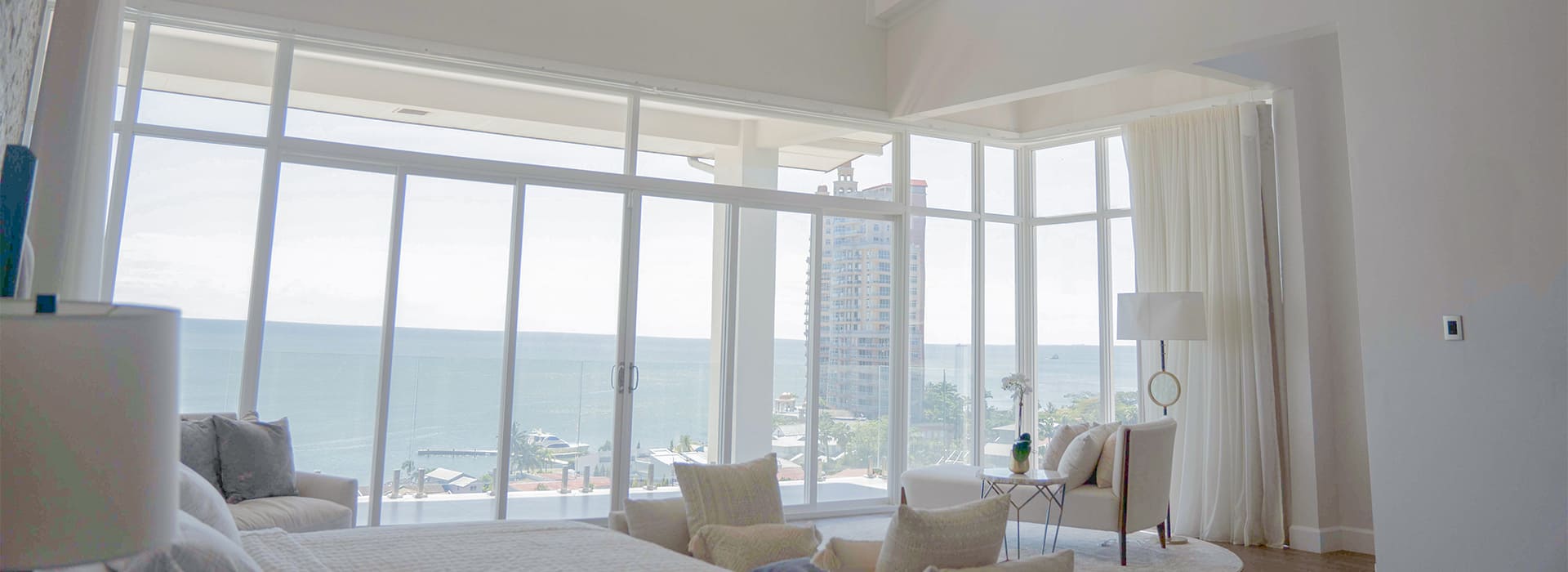
In the Caribbean, the environment doesn’t just influence construction—it defines it. Humidity and salt air are relentless. Security concerns are real. Energy efficiency matters. And hurricane season brings a level of risk that most North American markets will never experience.
For Domus Windows, those regional realities aren’t obstacles—they are the blueprint.
“We’re focused on the Caribbean climate and what goes with it,” says Terry Ortt, CEO of Domus Windows, describing the company’s core design principles. “A lot of humidity, high salt content air, hurricanes, security, energy savings. Those are really at the core.”
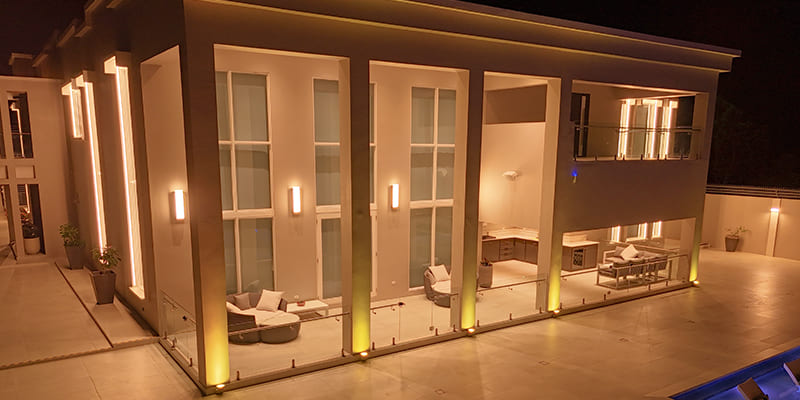
Operating in the window, door, and outdoor products space, Domus has built its niche around UPVC—a material the company believes offers the resilience required for Caribbean conditions. But beyond material selection, Domus differentiates itself through breadth of product range, manufacturing sophistication, and an uncommon capacity for mass customization at scale.
A Business Model Built for Island Logistics
The Caribbean presents a unique economic challenge: small island markets with fragmented demand can make shipping and supply chain economics difficult. Domus addresses that reality with a wide product range designed to serve multiple customer needs, enabling consistent shipment volume and creating the scale required to operate efficiently.
“When we’re dealing with smaller islands, we need to be able to have enough breadth of customer base in order to make shipping economic,” Ortt explains.
That range, however, is not limited to standard “off-the-shelf” solutions. Domus is structured for customization—down to the elemental level—something that becomes a true competitive advantage in a region where projects can vary dramatically by island, building style, and exposure conditions.
“We’re geared up for mass customization,” Ortt says. “We have 1,000 different configurations. Each component element of each configuration can be custom sized. For example, we have up to 150 glass options.”
The Origin Story: Frustration That Became Opportunity
Domus wasn’t born out of a business plan; it was sparked by a real market failure.
Before moving to the Caribbean, Ortt’s background was firmly rooted in large-scale corporate leadership, including serving as CEO of UniHost Corporation and Chairman of Choice Hotels Canada while overseeing a major integrated hotel operation serving 2.5 million guests per annum. But after relocating, he encountered a painful truth as a homeowner renovating a property in Jolly Harbour, Antigua.
Windows that were promised in six weeks took six months. Doors took two years.
“That’s when I thought… there is a very real need for those products,” he recalls. “But not the way they’re doing it.”
That gap—high demand paired with unreliable delivery and inconsistent quality—became the catalyst for Domus. Just as important, Ortt aimed to build the business differently than the traditional structures he observed in the region.
“I was motivated to do something different,” he says, describing a more corporate, empowerment-focused model built around self-starters, rather than what he calls a more autocratic hierarchy common in many Caribbean businesses.
Surviving Two Major Disruptions—and Growing Stronger
Domus began operations in 2007, launching in St. Kitts in a repurposed sugar factory to develop product lines and establish market positioning. Early momentum was strong—then the global financial crisis hit.
“By the middle of 2008, 90% of construction went away,” Ortt says. “When construction died… that was pretty difficult.”
The company stabilized over time, and by 2012, signs of renewed market demand led Domus to pursue a major strategic move: building a purpose-built manufacturing facility in Trinidad. But in the Caribbean, timelines expand.
“In the Caribbean, everything takes about 10 times as long as it does in Canada or the US,” Ortt notes. Ultimately, it took until 2018 to secure land, build the factory, and relocate production from St. Kitts.
That move proved transformational.
Trinidad offered a substantially larger domestic market, improved logistics access, and the opportunity to build a facility engineered specifically for high-efficiency and output capacity. While the pandemic in 2020 created another setback, the post-pandemic period has been marked by rapid growth.
“From 2021 onward, we’ve been growing very quickly and doing well,” Ortt says.
A World-Class Factory—and a Productivity Advantage
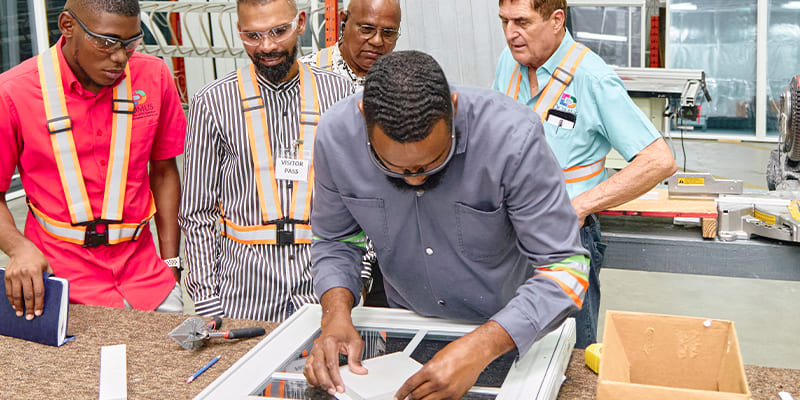
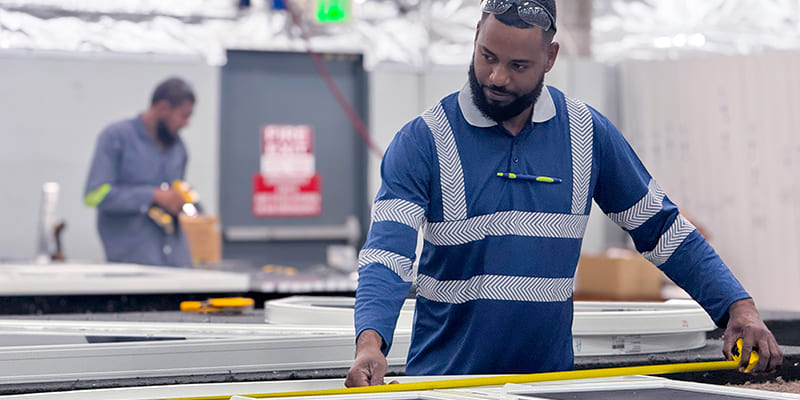
Unlike many manufacturers forced to adapt to imperfect facilities, Domus built a factory designed around the company’s operational needs from the ground up. The result, Ortt says, is a highly efficient plant with a measurable productivity edge.
“In benchmarking, we find that we can produce approximately three times as many windows as our competitors per man hour,” he explains.
The facility’s location also supports performance—positioned near major highways and not far from the port—critical advantages in a region where logistics can make or break production timelines.
Technology Investment: Millions Spent to Create Control and Clarity
Domus’ operational sophistication isn’t limited to physical infrastructure. Ortt’s early career included building and scaling an IT company, and he brought that mindset into the manufacturing environment. Domus has invested heavily in software and systems that support end-to-end tracking—an essential capability in the Caribbean where shipping schedules, container availability, and delivery certainty can be unpredictable.
“We’ve spent millions of dollars on our software and the processes and tools that go along with it—like tracking orders and tracking shipments,” Ortt says. “Tracking shipments is a big issue in the Caribbean.”
When asked about AI, Ortt is candid: while it may assist with rudimentary tasks, he does not see it as central to the Domus model—particularly given the complexity of mass customization and the consultative approach the company takes with clients.
Product Lines Designed for Real-World Threats
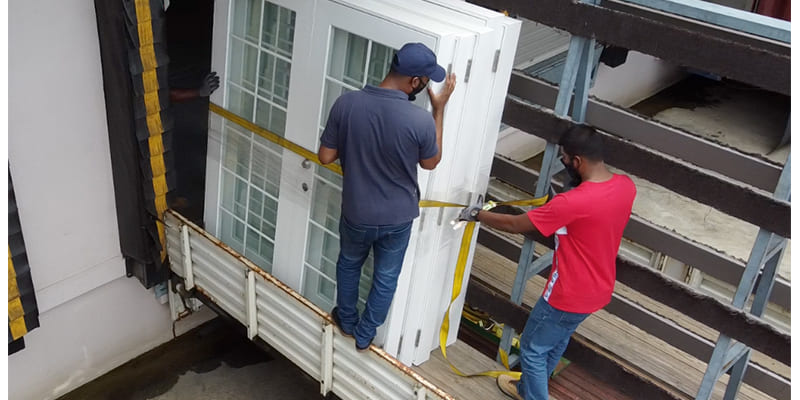
Domus segments its product portfolio into three primary categories: basic units, security, and hurricane systems—plus a smaller set of outdoor products such as handrails and fencing.
The “basic” category serves conventional needs, but Domus’ market focus is clear. Despite basic windows representing the majority of the broader market, Domus’ sales mix is weighted heavily toward higher performance solutions.
“We only do about 15% of our sales in basic,” Ortt says. “Seventy-five percent is in the security and hurricane lines.”
In security products, Domus offers multiple tiers—including high-impact systems built to withstand forced entry. In hurricane products, the company positions its standards at the top end globally, citing wind-load ratings and practical learnings from real-world storms.
“We have the highest standards, I believe, in the world,” Ortt says. “Higher than Miami-Dade… in terms of wind load—200 miles an hour.”
Domus also operates its own test lab and points to Hurricane Irma in 2017 as a proving ground—an event that helped launch the company’s “economical hurricane line” based on performance observed under worst case hurricane conditions.
Materials Engineering: Quality in the Details
In Caribbean environments, failure often comes from what others consider minor components. Domus takes a holistic approach to materials engineering, with high corrosion resistance provided by all components including installation fasteners, whereas many window systems break down over a short period of time.
“The screws that we use are coated with an industrial coating used in aerospace and food processing and offshore oil and gas,” Ortt explains. “Whereas 99% of windows outside our company are installed using regular steel screws… within two to five years, the screws are totally eaten.”
It’s a technical detail, but one that reflects Domus’ broader philosophy: products must be engineered for real Caribbean exposure, not adapted from designs intended for other climates.
Supply Chain: The Biggest Constraint—and the Biggest Discipline
For Domus, supply chain isn’t a secondary issue—it is one of the most difficult structural challenges in the business.
“We have to carry probably three to four times as much inventory as North American manufacturers,”Ortt says, citing long lead times, container-based shipping requirements, and the complexity of batching materials at scale.
Because many suppliers are oriented toward North American trucking logistics, Domus must adapt processes for container shipping and timing—another example of where technology, planning, and inventory strategy become competitive requirements.
Market Demand and the Human Cost of Storm Risk
Construction demand today is “quite steady,” Ortt notes, though it varies from island to island in boom-and-bust cycles. Domus mitigates volatility by serving a wide geographic footprint from Guyana to Jamaica, smoothing demand across markets.
Still, Ortt is candid about the region’s cultural approach to hurricane risk—often rooted in taking chances rather than investing in protection. As a professional engineer specializing in hurricane resistance, he emphasizes that window and door integrity is foundational.
“Eighty to ninety percent of all building failure starts with the failure of a window or door,” he says. “Once you keep the shell intact, the chances of losing a roof or having major damage drop dramatically.”
Looking Ahead: Jamaica as the Next Growth Engine
Asked about priorities for the next 18 eighteen months to two years, Ortt points to one clear focus: deeper penetration in the Jamaican market.
“It’s more than half of the population of the entire Caribbean,” he says. “It’s in one location, so the ability to achieve economies of scale in delivering the highest level of service and more frequent shipping really can work for us.”
With frequent container shipping already in motion and a market scale that supports consistent logistics flow, Jamaica represents both a growth opportunity and a strategic anchor for Domus’ next phase.
In a region where weather risk of the strongest of hurricanes is increasing, quality is inconsistent, and logistics are complex, Domus Windows is betting on a model built around engineering, operational discipline, and performance that doesn’t break down when conditions get tough. In the Caribbean, that is not just a value proposition—it is a necessity.
Click The Cover To View Or Download The Brochure
AT A GLANCE
Who: Domus Windows
What: An innovative and industry leader that puts unparalleled construction and safety first
Where: Operating across the Caribbean region
PREFERRED VENDORS/PARTNERS

Concepts In Freight Limited www.cifglobal.com
Based in Trinidad and Tobago, Concepts in Freight Limited delivers comprehensive global logistics solutions built on reliability and personalized care. We combine modern technology with a hands-on approach to ensure efficient, secure shipping. Our philosophy focuses on service flexibility, meticulous attention to detail, and building strong, lasting relationships.

DIG DIGITAL?
 This information will never be shared to third parties